 Published by Michael Becker
Last updated on July 14, 2026
•
9 minute read
It is hard to imagine a modern company without a stable Internet connection or without services on its local network. Behind this stable infrastructure is an employee who helps keep all systems running smoothly: the network administrator. But who is a network administrator, and why is it such an important role for modern companies?

The Backbone of Digital Infrastructure
A network administrator is an information technology (IT) professional who deals with the day-to-day operation and maintenance of an organization’s computer networks. Also known as a systems administrator or network admin, these individuals are the caretakers of network infrastructure. Network administrators manage computer networks of all sizes and types: from local area networks (LANs) to wide area networks (WANs), telecommunications systems, and cloud computing environments.
Network administrators also ensure that computer systems administrators keep these networks secure and running optimally. They work in a wide range of IT departments, from hospitals to banks, and everything in between.

Core Responsibilities and Job Description
The network administrator’s job description varies widely. As many sources claim, network admin jobs cover network design, implementation, support, and maintenance.
Responsibilities of a network administrator include:
▪️ Monitoring network performance – Troubleshooting and analyzing issues, detecting bottlenecks, and monitoring the state of routers, firewalls, and network hardware
▪️ Enforcing security – Handling cybersecurity, performing security audits, and preventing cyberattacks by managing firewalls and access permissions
▪️ Hardware and software management – Installing routers and gateways, setting up operating systems, performing hardware and software upgrades, and maintaining network support hardware and software
▪️ Technical support – Offering technical support to users and solving connectivity issues by providing direct hands-on assistance and problem-solving capabilities
A network administrator works side-by-side with network engineers and other IT specialists to develop business continuity plans, review and analyze server logs to detect anomalies, and respond to security alarms. It’s a tech-oriented role requiring good communication skills as well because of the need to explain technical issues to non-tech stakeholders.
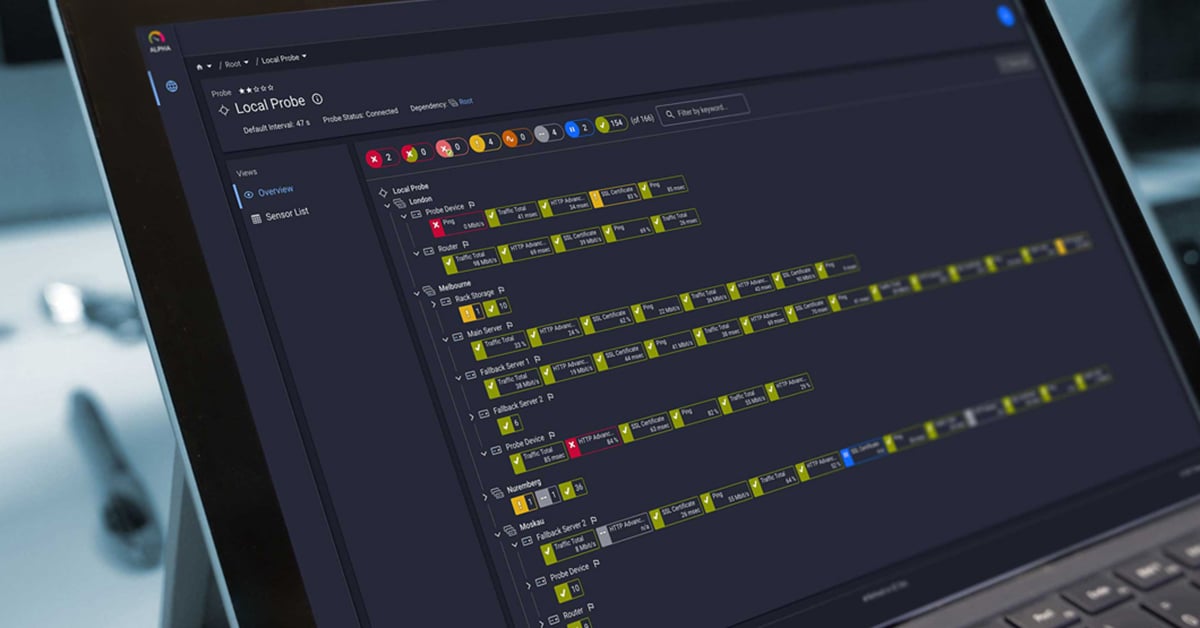
Modern network administrators rely on powerful monitoring solutions like PRTG Network Monitor to keep their infrastructure running smoothly. PRTG provides comprehensive network performance monitoring, real-time alerts, and detailed insights into routers, firewalls, and all connected devices.
👉 Download your free trial today and experience hands-on how professional network monitoring can optimize your network infrastructure.
Are you passionate about network infrastructure and information technology? Explore exciting career opportunities in network administration and related IT fields at our Paessler job portal. Join a team that values technical excellence and innovation.
Must-Have Skills for a Network Administrator
Becoming a successful network admin requires diverse technical skills and soft skills. According to industry data, essential skills include strong fundamentals in networking technologies such as TCP/IP, routing, switching, and network security.
Technical expertise needed:
💻 Understanding of LANs, WANs, Virtual Private Networks, and telecommunications systems
🔐 Knowledge of cybersecurity components including firewalls, access control, and security measures
🖥️ Proficiency with Cisco and Microsoft technologies, network hardware configuration, and operating systems
🌐 Familiarity with cloud computing, software development concepts, and automation tools
Communication, teamwork, and excellent troubleshooting skills are important soft skills for network administrators to work with the IT department. To be a successful Network Admin, one must have the ability to troubleshoot under pressure and maintain network performance.
Education Options and Career Path
There are several different paths that can be taken to work toward becoming a network administrator. Cyberseek data shows that 47 percent of network administrators have an associate degree or higher, 42 percent have a bachelor’s degree, and around 9 percent have an advanced degree.
Entry-level positions may be available to those with an associate degree in information technology or computer science that includes routing, network security, and system administration. A bachelor’s degree in a field related to computer science or network administration allows for more in-depth knowledge and greater opportunities for advancement.
Professional certifications are an excellent way to jump-start one’s career. The certifications listed below are all industry-recognized, meaning they are respected and widely known by employers. These credentials are used to show hands-on experience in relevant work and can be a great way to develop additional specialized knowledge:
📜 CompTIA Network+ certification
A common first step in beginning a career in IT, this certification shows basic networking knowledge
📜 Cisco Certified Network Associate (CCNA)
Cisco is an industry leader, and this Cisco-specific certification expands on general networking principles as well as Cisco technology
📜 CompTIA Security+
A certification focused on validating cybersecurity skills such as network security and threat assessment
📜 CCNP (Cisco Certified Network Professional)
Cisco’s advanced certification that is typically reserved for those with prior experience in the field
Starting out in an entry-level IT position, like technical support or a junior network support role, is a common first step for many. As one gains more experience, they can move into roles as a senior network administrator, network engineer, network architect, IT manager, and eventually even chief information security officer. Network architect was recently named one of the best jobs by the Bureau of Labor Statistics, as the field is expected to continue to grow.
The Future of Network Administration
The role of network administration is continuously evolving to accommodate new technologies. Software-Defined Networking, or SDN, is making it easier for network administrators to optimize and manage resources. Artificial intelligence and automation technologies can simplify repetitive tasks like network performance monitoring, freeing up time for network administrators to focus on strategic work.
Cloud computing and mobile device adoption are rapidly accelerating. As a result, there is a growing need for network administrators with deep experience in these technologies. Cybersecurity threats are also more advanced than ever. The need for IT professionals with a strong background in cybersecurity has never been greater.
Start Your Network Administration Career Today
Network administration is an engaging and rewarding career field for those interested in information technology and troubleshooting. It’s a role that plays a crucial role in every organization’s digital operations. For this reason, there is great job security and advancement opportunities for network administrators in a variety of industries from healthcare to finance and telecommunications.

Ready to take the next step in your IT career?
Visit the Paessler careers page to discover current openings in network administration and related technology roles. Join us in building robust, secure network infrastructures that power modern businesses.


 You there!