 Published by Michael Becker
Last updated on July 16, 2026
•
7 minute read
We're excited to kick off 2026 with the first stable release of the year! PRTG version 26.1.116 is now available and brings you important security improvements, five new experimental sensors (including Proxmox VE and Siemens SIMATIC support), and many fixes and enhancements across the board.
Here are the highlights:
🧩 New experimental sensors
This release introduces five new experimental sensors in BETA status. These sensors are fully functional but may still receive breaking changes in future versions:
Proxmox VE support:
-
Proxmox VE Virtual Machine Status sensor - Monitor performance metrics and status of QEMU virtual machines on your Proxmox VE clusters. To use this sensor, configure the Credentials for Proxmox in your device settings with API token authentication.
-
Proxmox VE Container Status sensor - Track performance metrics and status of LXC containers on your Proxmox VE clusters. This sensor also requires Proxmox credentials with API token authentication in the device settings.
SSL/TLS Certificate sensor:
-
SSL/TLS Certificate sensor - The successor to the SSL Certificate sensor, completely rewritten to work on the Multi-Platform Probe. You can now monitor SSL/TLS certificates of secure connections across different platforms. Please note that this sensor does not yet support the Use SOCKS proxy setting.
Siemens SIMATIC support:
-
SIMATIC S7-300/400 CPU Restart Overview sensor - Detect and classify restart events (cold, warm, hot, planned or unplanned) from your legacy Siemens PLCs. This sensor helps you understand why and how often a PLC has restarted - critical for diagnosing power losses, software crashes, or watchdog faults. The sensor uses Snap7 and S7 protocol to access the diagnostic buffer of the PLC.
-
SIMATIC S7-300/400 CPU Status sensor - Connect to your Siemens PLCs using the S7 protocol and read key diagnostic values like CPU mode (RUN/STOP), OB1 cycle time, cycle load, and recent watchdog events. The sensor provides your OT teams with remote access to metrics that would otherwise require on-site inspection via TIA Portal. Data is collected read-only using Snap7.
🔒 Security improvements
We've added several security enhancements to make your PRTG installation more secure:
- SSO users can create API keys - If you authenticate via Single Sign-On (SSO), you can now create your own API keys directly in PRTG.
-
Display name character limit - We introduced a 240-character limit for display names. This prevents potential issues with excessively long names and improves database performance.

✅ Sensor improvements and fixes
We've fixed several sensor-related issues and added compatibility updates:
-
Veeam Backup Job Status & Veeam Backup Job Status Advanced sensor - We fixed a compatibility issue that did not support Veeam 13 for Veeam Backup Enterprise Manager and Backup Server.
-
HTTP sensors - Fixed an issue where certain HTTP sensors (HTTP Push Data Advanced, HTTP IoT Push Data Advanced, and HTTP Data Advanced) were missing in the Add Sensor list or stopped working after you updated to a previous PRTG version.
-
HPE 3PAR Drive Enclosure sensor - Now works correctly with HPE Primera Storage systems.
🌐 New UI improvements
We fixed an important issue in the WEBGUI:
-
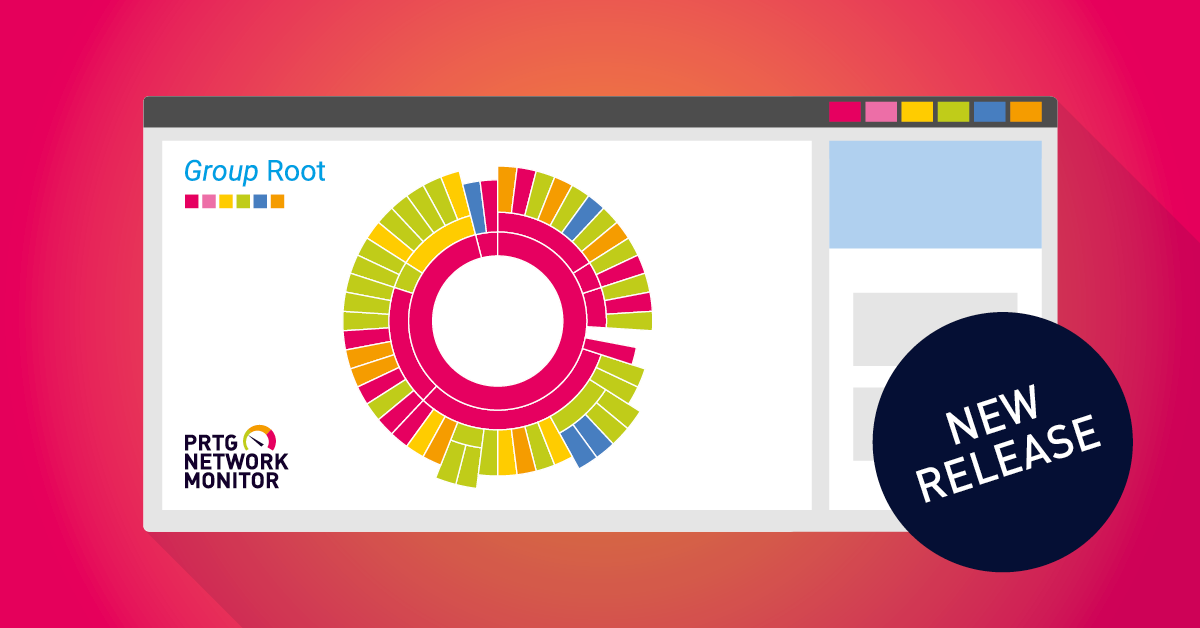
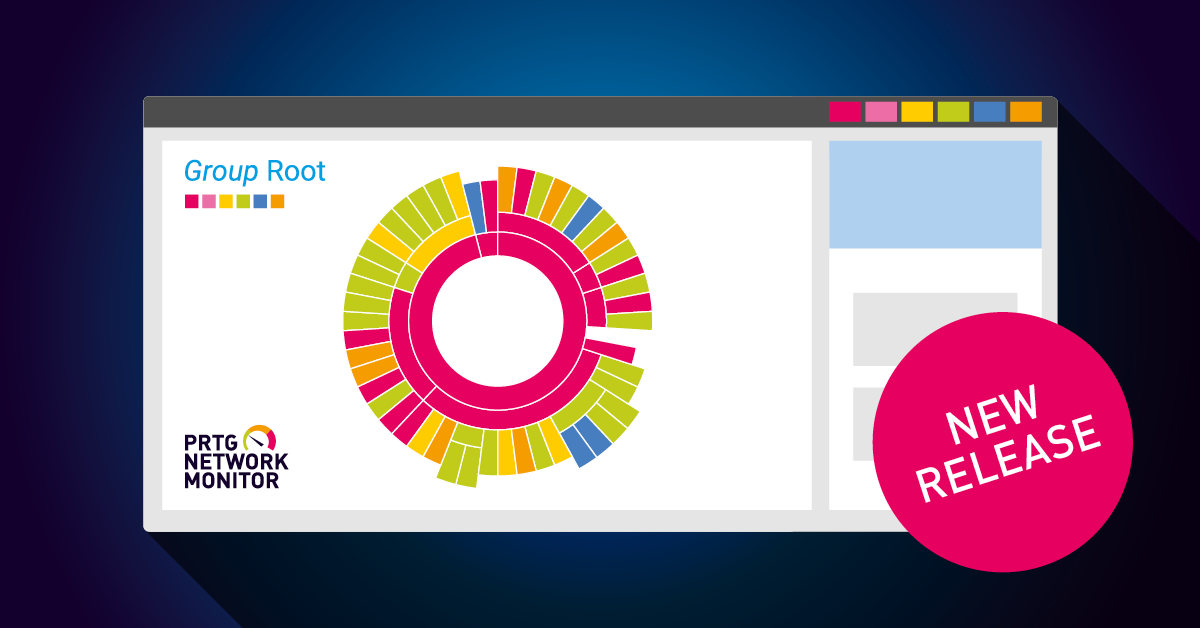
Public Maps - We fixed an issue for public Maps that displayed an error Map refresh failed when you configured an external link before in the map designer and clicked on the corresponding object in the public map.
This issue also occurred with any Sunburst map object that you have added to your map. Opening the links to the individual objects would also lead to an error.
📡 PRTG API v2 enhancements
We've made improvements to the PRTG API v2:
-
Creatable sensor types - You will now receive a list of creatable sensor types via endpoint
/experimental/schemas/{parent}when you have created a group or device. The result shows which sensors are creatable with acreatable=trueflag and lists the preconditions that must be met to create the sensor.
🗒️ Check our PRTG release notes
In summary, PRTG 26.1.116 includes 110 resolved issues, including 17 implemented features and stories, 27 bug fixes, 27 completed tasks & to-dos, and 31 finished documentation tickets. For all the details, take a look at our release notes page.
We also offer a public roadmap of PRTG on our website, which we update regularly. There you can read which features we are currently working on and what kind of things we want to implement in PRTG in the future.
🖥️ Get ahead of failures - Join our upcoming "Monitoring Matters" webinar
Managing a complex Linux environment doesn't have to be overwhelming.
Join us on February 18th, 2026 for a live session where our experts Marco Schäpers and Mustafa Farag show you how to catch issues before they escalate, optimize system reliability, and protect your operations.
Why you should attend this live demo:
-
Prevent server failures - Configure proactive monitoring for major Linux distributions (Ubuntu, RHEL, CentOS, Debian, SUSE) and other Unix-based systems.
-
Find the right monitoring method - Discover which approach works best for your environment: SSH, SNMP, custom scripts, or REST API sensors.
-
Master the metrics that matter - Track CPU and memory usage, disk I/O, load average, service health, network performance, and more.
-
Catch issues before users complain - Use tailored dashboards, smart thresholds, and early-warning alerts for critical Linux services.
-
Get your questions answered - Engage directly with our experts during the live Q&A.


 You there!