 Published by Michael Becker
Last updated on January 21, 2026
•
7 minute read
Okay, real talk. When's the last time you actually thought about IPv6? Like, really thought about it?
I'm guessing it's been sitting on your to-do list collecting dust. Maybe you glance at it occasionally, tell yourself dual-stack is working fine, that IPv4 will stick around for another few years at least. I mean, it's been working this long, right?

Except here's where things get interesting. We're in early 2026 now, and global IPv6 adoption just blew past 45%. France hit 85% - yes, eighty-five percent. The U.S. finally crossed 50%. And if you're not monitoring your IPv6 networks? You're basically flying blind through half your traffic. Sometimes more than half.
IPv6 isn't this future thing anymore. It's already here, quietly running in the background while you're busy putting out other fires. The problem isn't the protocol itself, it's that most of us IT admins keep treating IPv6 monitoring like it's optional.
Meanwhile, your users are already connecting via IPv6. There's this thing called Happy Eyeballs that makes their devices prefer IPv6 connections automatically. Your ISP might be running IPv6-only core networks. Cloud providers like AWS and Microsoft are pushing IPv6-native services harder every single month.
What happens when you can't see what's actually happening? Problems start small. They pile up in ways that are hard to track down. Performance degrades, but you can't quite figure out why. Security gaps appear in places you're not even looking. And by the time something breaks badly enough that you notice? You're already deep in troubleshooting hell instead of preventing the issue in the first place.
The IPv6 Reality Check: Where We Stand Today
So let's talk numbers for a second.
Google's IPv6 stats show nearly half of all internet traffic flowing through the IPv6 protocol now. Asian countries like India, Malaysia, Vietnam - they've been crushing it with adoption. Why? They never had mountains of IPv4 addresses to begin with. They had to make IPv6 work. No choice, really.
But here's what the adoption numbers don't tell you. Your network is probably dual-stack enabled already. Router supports IPv6, check. Firewall has it turned on, check. But are you actually monitoring IPv6 connectivity and traffic the same way you monitor IPv4?
Yeah, I didn't think so. That's where things start falling apart.
An IPv6 address uses 128 bits instead of 32. Stop and think about that address space for a second - it's so huge that your traditional scanning methods don't just become slow, they become pointless. The internet protocol handles everything differently now. Fragmentation happens at the source instead of routers. ICMPv6 plays a way bigger role than ICMP ever did in the IPv4 world. DNS lookups use AAAA records now, not A records.
These aren't small tweaks you can ignore. They're fundamental changes.
Ready to get full visibility into your IPv6 infrastructure?
PRTG Network Monitor gives you comprehensive IPv6 monitoring with support for dual-stack environments, real-time metrics, and instant notifications when something goes wrong.
👉 Download your free trial and see exactly what's happening in your IPv6 networks - no guesswork required.
Why IPv6 Monitoring Is Different (and Trickier)
That massive address space I just mentioned? It's a blessing and a curse.
You literally cannot scan an IPv6 subnet the way you'd scan IPv4. The numbers are too big. Your discovery methods need a complete overhaul.
Most networks run both protocols simultaneously now - dual-stack is pretty much standard. And your users' devices will pick IPv6 first when it's available. But if your monitoring setup only tracks IPv4 properly? You're missing half the story.
Service looks perfectly fine via IPv4. Dashboard shows green across the board. Meanwhile, IPv6 is broken and users are already calling the helpdesk. Everything looks normal from where you're sitting.
Security gets weird too. IPv6 came with IPsec and SSL support built right in. In practice, it means you're monitoring completely different authentication patterns and encryption methods. Router advertisements can be exploited in ways that didn't exist before. Miss tracking ICMPv6 traffic? You'll miss critical network management info.
- Visibility gaps in dual-stack - Traffic's going through IPv6 while you're staring at IPv4 metrics
- New attack vectors - Router advertisement spoofing, neighbor discovery attacks
- Performance blind spots - Can't fix what you can't measure
- Configuration mess - Devices with IPv6 enabled but not configured or secured correctly
What You Actually Need to Monitor in IPv6 Networks
Start with the basics - uptime monitoring for your IPv6 enabled devices and endpoints. IPv6 connectivity needs verification. Can your IPv6 networks actually route traffic? Does DNS resolution work for AAAA records? Are your firewall rules blocking legitimate IPv6 traffic?
Traffic analysis matters in dual-stack environments. What's your IPv6 to IPv4 ratio? Which services are using which protocol? Any performance differences between them?
Then you've got IPv6-specific stuff. Router configurations. Neighbor discovery messages. Tunnel endpoints. VPN connections behave differently with IPv6.
Real-time notifications are huge. When an IPv6 route dies or DNS stops answering AAAA queries, you need to know now.
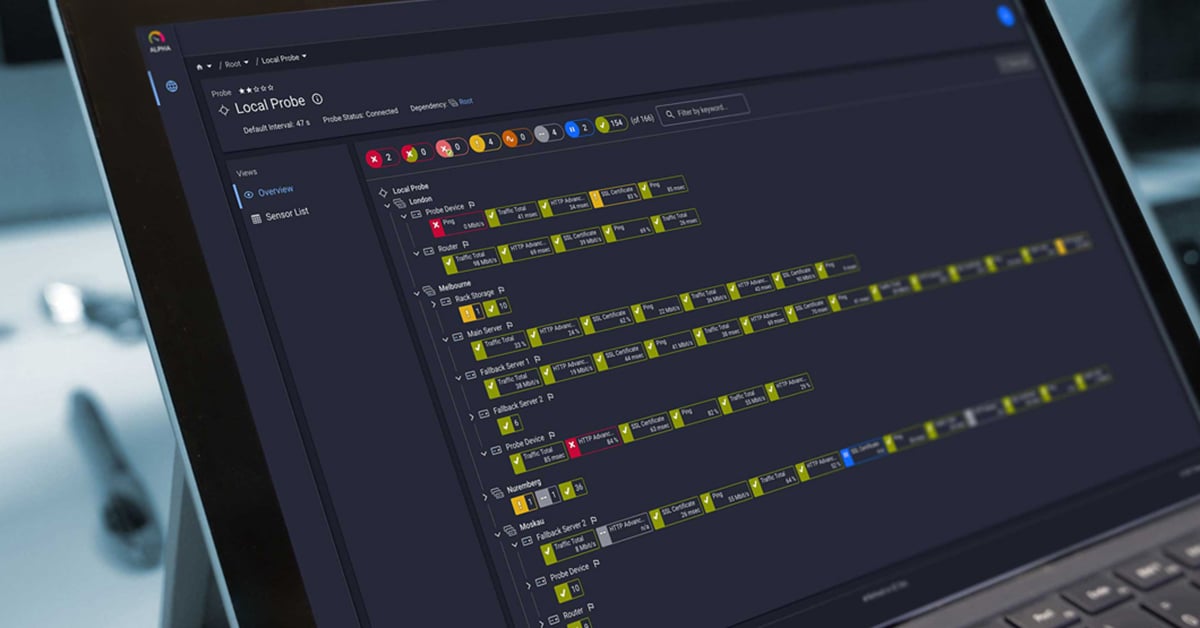
Your dashboard should show everything together. IPv4 and IPv6 side by side. PRTG supports the IPv6 protocol across most sensors and gives you a unified view without treating IPv6 like an afterthought.
Practical Tips: Making IPv6 Monitoring Work
Audit what you've got. You probably have more IPv6-capable devices than you think. Figure out what's actually using IPv6.
For dual-stack monitoring, get tools that speak both protocols natively. PRTG uses the same sensors for IPv4 and IPv6 infrastructure. Consistent data you can compare.
API integration becomes essential once you're dealing with scale. You cannot manually check every IPv6 address. Use APIs to automate responses and build playbooks for IPv6-specific problems.
- ISP environments - Track customer IPv6 adoption rates, monitor tunnel endpoints
- Enterprise networks - Watch IPv6 traffic across VPNs, verify authentication, track remote worker performance
- Cloud deployments - Monitor IPv6 connectivity across AWS regions, check dual-stack load balancers, verify SSL certificates
Scalability matters. Monitor distributed networks through remote probes that handle thousands of devices.
Don't Wait Until IPv4 Stops Working
IPv6 adoption keeps accelerating. Governments mandate it. Cloud providers prioritize it. Mobile networks already run it. This transition is happening with or without you.
Start monitoring what you already have. Get visibility into current IPv6 traffic. Find the gaps. Set up notifications for IPv6-specific issues. Build understanding gradually.
Networks that do well are the ones that built monitoring into their infrastructure early. They troubleshoot IPv6 problems in minutes because the metrics are already there.
You can keep treating IPv6 like someone else's problem. Or you can take control now.
Take the first step toward complete network visibility.
PRTG Network Monitor handles IPv6 monitoring with the same sophistication it brings to IPv4 - dual-stack support, comprehensive sensor coverage, customizable dashboards, and real-time alerts.
👉 Start your free trial today and discover what you've been missing in your IPv6 networks. The internet protocol of tomorrow is carrying your traffic today. Make sure you can see it.


 You there!