 Published by Michael Becker
Last updated on March 30, 2026
•
10 minute read
You know that feeling when you're managing workloads across AWS, Azure, maybe some Google Cloud, and you're not entirely sure what's happening where? Yeah, that's become the norm for most IT admins these days.

Gone are the days when everything sat nicely in your on-premises data center. Now? You've got virtual machines spinning up automatically, serverless functions you barely understand, and probably some legacy systems that refuse to die. And somewhere in this mess, you need to make sure everything actually works when users need it.
That's where cloud monitoring comes in. Not the "nice to have" kind - the "absolutely essential or you're asking for trouble" kind. Because here's the truth: without proper monitoring in your cloud computing environment, you're guessing. And guessing doesn't work when downtime costs thousands per minute.
Why Cloud Monitoring Matters More Than Ever
Multi-cloud environments are a nightmare to manage. There, I said it.
Each cloud provider does things differently. AWS has its quirks. Azure has its own special way of making simple things complicated. And don't even get me started on trying to maintain a hybrid cloud where half your stuff is still on-premises because "we'll migrate it eventually."
The problem is visibility. Or lack of it. Your users don't care that your application spans three different cloud providers and two data centers. They just want their app to load in under two seconds. When it doesn't? You hear about it. Fast.
And cloud environments create blind spots that traditional monitoring just misses. Resources appear and disappear. Kubernetes containers come and go. Serverless functions execute for milliseconds and vanish. Something breaks, and good luck figuring out where if you're not monitoring properly.
Real-time monitoring isn't optional anymore - it's the difference between catching an issue before users notice and spending your afternoon apologizing for an outage. Your cloud performance depends on having that visibility.
Want to actually see what's happening in your cloud infrastructure?
👉 Download PRTG free and monitor everything - AWS, Azure, Google Cloud, on-premises systems - from one dashboard. No credit card needed.
Core Components of Cloud Monitoring
So what should you actually be monitoring? Let me break it down:
Infrastructure Monitoring
- Virtual machines and their health (CPU, memory, the basics)
- Network performance and bandwidth
- Load balancers - are they actually balancing anything?
- Resource utilization (because cloud costs add up fast)
- Scalability metrics - how your systems handle traffic spikes
Application Performance Monitoring (APM)
- Response times that actually matter to end-users
- API performance (especially if you're running microservices)
- Error rates before they become catastrophic
- Latency issues that kill user experience
- How your cloud applications perform under real workloads
Security Monitoring
- Vulnerabilities you didn't know existed
- Weird login attempts and suspicious activity
- Compliance stuff (HIPAA, GDPR - the fun regulations)
- Configuration changes that might expose security gaps
Cost Optimization
- Where your cloud budget is actually going (spoiler: probably idle VMs you forgot about)
- Pricing across different cloud services
- Resources you're paying for but not using
Here's the thing - these components aren't separate. They interact. A security issue impacts performance. Poor resource utilization murders your budget. You need to monitor all of it and understand how it correlates. That's why tracking the right performance metrics across your entire ecosystem matters so much.
Essential Cloud Monitoring Tools and Platforms
Choosing monitoring tools is where a lot of IT teams get stuck. Let's talk about your options.
🧩 Native Cloud Monitoring Solutions - And Why They're Limited
AWS has CloudWatch. Microsoft has Azure Monitor. Google Cloud has its monitoring platform. They're fine... if you only use one cloud provider and never plan to change that.
But most of us aren't that lucky. You're probably running multi-cloud environments because different teams chose different providers, or you're hedging your bets, or migration projects are taking longer than anyone expected. Using native tools means juggling three different dashboards, learning three different interfaces, and manually trying to correlate data. It's exhausting.
Plus, native tools don't help with your on-premises infrastructure. And I guarantee you've still got some of that.
🧩 Why Unified Platforms Like PRTG Make More Sense
This is where PRTG actually shines - and I'm not just saying that. When you're managing cloud infrastructure across multiple providers, you need one place to see everything.
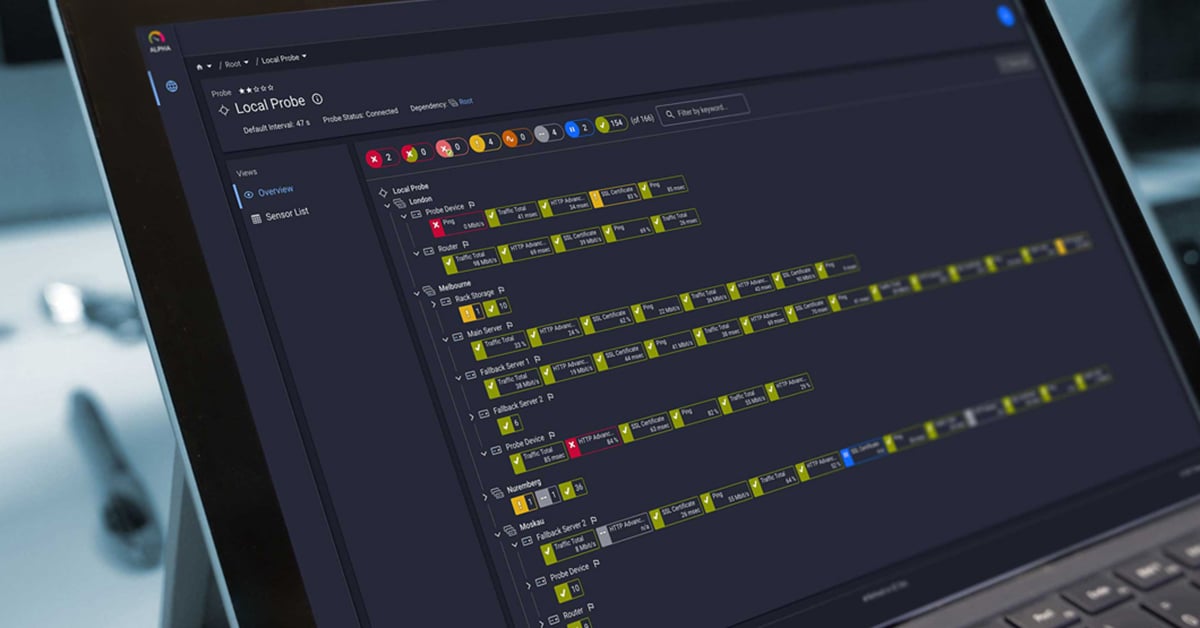
PRTG works as a comprehensive cloud monitoring platform that monitors AWS, Azure, Google Cloud, and your on-premises systems from a single interface. One dashboard. One set of alerts. One learning curve instead of three. It pulls data via API from CloudWatch, Azure Monitor, and other sources automatically, so you're not manually copying metrics around.
The pre-configured sensors mean you're not spending weeks setting everything up. You want to monitor an AWS EC2 instance? There's a sensor for that. Azure virtual machines? Covered. Network monitoring across your hybrid cloud? Done.
And the dashboards actually make sense. You can customize them for different teams - what DevOps needs to see is different from what security wants - without rebuilding everything from scratch.
🧩 Open-Source Options
Tools like Prometheus work well for Kubernetes monitoring and cloud-native applications. If you've got a DevOps team that loves configuration files and doesn't mind some complexity, open-source can be great for specific use cases. Just know what you're getting into.
Best Practices for Effective Cloud Monitoring
Having tools is one thing. Using them effectively? That's different.
🚀 Build Real Observability, Not Just Metric Collection
- Monitor the entire user journey - from their browser through your APIs to your cloud infrastructure
- Correlate events across different cloud services (because nothing happens in isolation)
- Aggregate metrics in ways that tell you what's actually going wrong
- Track dependencies so you know what breaks when something fails
- Implement end-to-end monitoring across your whole cloud-based infrastructure
🚀 Set Up Alerts That Don't Drive You Crazy
- Too many notifications and people start ignoring them all (ask me how I know)
- Focus on actionable alerts - things you can actually fix
- Use visualization to spot trends before they become emergencies
- Different teams need different dashboards - customize them
🚀 Automate What You Can
- Anomaly detection catches weird patterns you'd miss manually
- Machine learning helps with capacity planning and predicting failures
- Automated troubleshooting workflows speed up remediation
- Set up auto-responses for common issues
🚀 Monitor for Your Specific Needs
- DevOps teams need deployment tracking and pipeline visibility
- SaaS applications require uptime and end-user experience monitoring
- Serverless functions need different metrics than traditional VMs
- Public cloud security requirements differ from private cloud
🚀 Get Good at Root Cause Analysis
- When things break (and they will), you need to find out why quickly
- Proper log ingestion and trace correlation are essential
- Track error rates back to specific changes or deployments
The goal isn't monitoring everything possible. It's monitoring what matters.
Building Your Cloud Monitoring Strategy
Start by forgetting everything you knew about on-premises monitoring. Cloud infrastructure is dynamic. Resources scale automatically. Containers live for minutes. Your monitoring needs to adapt to that reality.
For multi-cloud environments, use a unified platform. Don't try to manage separate tools for each provider - you'll waste more time switching contexts than actually monitoring. A comprehensive cloud monitoring solution gives you consistent visibility everywhere.
Think about scalability now, not later. As you add cloud resources, applications, and users, your monitoring shouldn't become a bottleneck. Choose cloud monitoring tools that grow with your infrastructure.
Make sure your monitoring integrates with existing IT infrastructure and workflows. Most organizations run hybrid cloud setups - some stuff in the cloud, some on-premises. Your monitoring strategy needs to cover both seamlessly.
Define what "good" looks like. What response times are acceptable? What's your target uptime? What latency can you tolerate? Without baselines, you're just collecting numbers.
Ready to simplify your cloud monitoring?
👉 Try PRTG free for 30 days - monitor AWS, Azure, GCP, and on-premises infrastructure from one intuitive platform. See why thousands of IT teams trust PRTG.
Moving Forward
Cloud monitoring isn't something you set up once and forget about. Your infrastructure changes. Cloud providers add new services. Applications get more complex. Your monitoring evolves with all of it.
Start with the essentials - get visibility into critical infrastructure, applications, and services. Make sure you can detect issues before users complain. Then expand. Add more observability. Refine your automation. Improve your workflows.
The cloud offers incredible capabilities - flexibility, scalability, all that good stuff. But only if you can actually see what's happening and respond when things go wrong. Master cloud monitoring, and you've got the foundation for cloud services that work reliably.
Without it? You're just hoping nothing breaks. And hope isn't a strategy.


 You there!